

1. Why Bacon Turns the Stovetop Into a Mess
Anyone who has asked how to cook bacon has likely met the same problem: popping fat, a greasy backsplash, and strips that are burnt at the edges but limp in the middle. The cause is simple.
The good news is that the mess is mostly a method problem, not a bacon problem. Controlling heat, containing the grease and choosing the right surface change the result dramatically.
Each method has real strengths. We will cover temperatures, timing, cleanup and storage so you can pick the one that fits your kitchen and your schedule.
2. Oven Baked Bacon: The Hands-Off Method
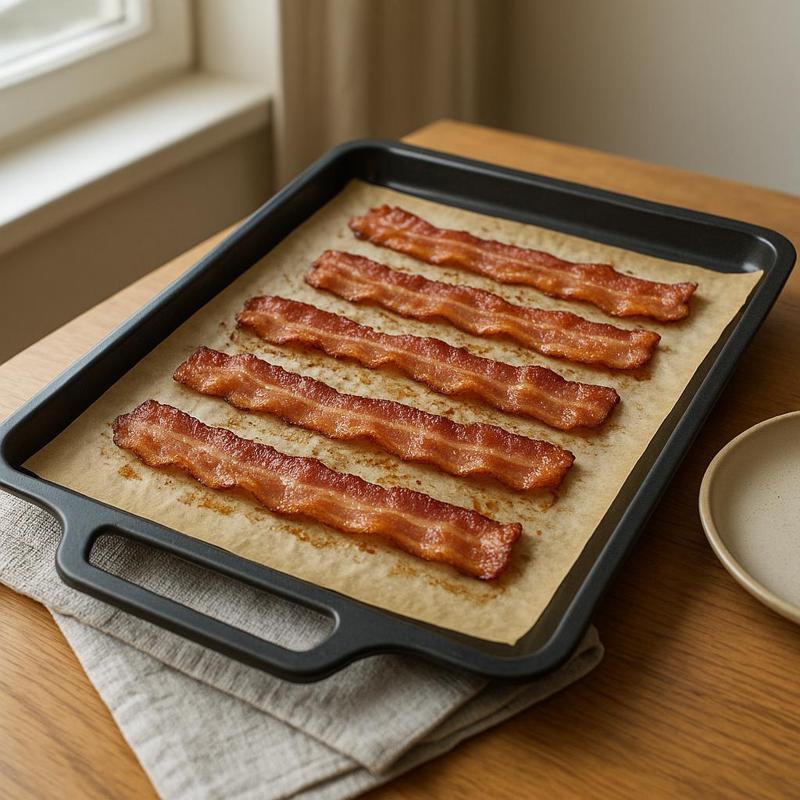
Oven baked bacon is the favorite for anyone cooking more than a few strips. Heat surrounds the bacon evenly, so the slices cook flat and uniformly without turning or tending.
Setup
Line a rimmed baking sheet with foil or parchment, then lay the strips in a single layer with a little space between them. Overlapping causes steaming and uneven crisping.
If you bake often, a sturdy rimmed sheet and a fitted rack are worth having; the kitchen bakeware collection is a good place to look for pans that resist warping at high heat.
Temperature and timing
Start in a cold oven, then set it to 400°F (200°C). Thin-cut bacon usually needs 12 to 15 minutes. Regular-cut takes 15 to 20 minutes, and thick-cut can need 20 to 25 minutes.
Doneness cues
Pull the pan when the strips are deep golden and the fat has turned translucent. Bacon continues to crisp as it cools on a paper towel, so take it out just before it looks fully done.
Why it works
Because the grease stays in the pan, there is almost no spatter on the stovetop. A full pound fits on one large sheet, which makes this the best choice for brunches, sandwiches and meal prep.
3. Air Fryer Bacon: Fast, With One Catch
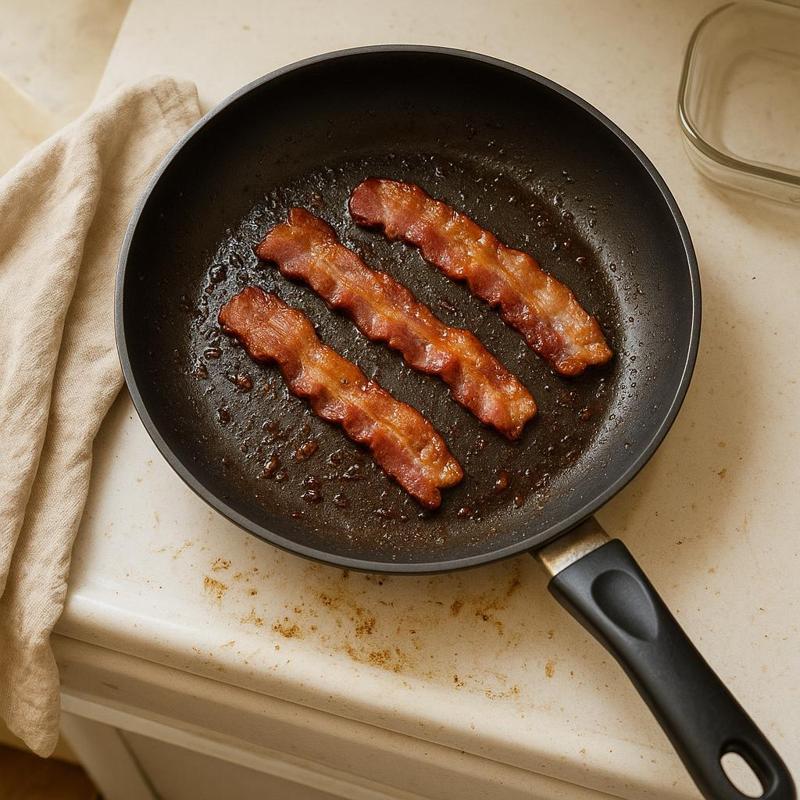
An air fryer circulates hot air in a compact chamber, so bacon cooks quickly and turns out crisp. It is a strong option for one or two people who want a few strips without heating a full oven.
Temperature and timing
Set the air fryer to 350°F to 375°F (175°C to 190°C). Cut strips to fit if needed and arrange them in a single layer without overlap.
The catch: grease and smoke
Fat collects in the bottom of the basket, and if it builds up and overheats, it can smoke.
Also keep strips from touching the heating element, and avoid lightweight parchment that can lift into the fan unless it is weighted down by food. Compact models hold only a few strips at a time, which limits batch size. If you are comparing models or looking for liners and accessories, the kitchen small appliances collection and small appliance parts and accessories are useful starting points.
4. Skillet Bacon: Classic Control, More Cleanup
The skillet remains the most familiar method, and it gives you the most direct control. You can watch the bacon, adjust the heat and stop at the exact moment you want.
Temperature and timing
Place the strips in a cold pan, then turn the burner to medium-low. Starting cold renders the fat slowly and prevents the edges from scorching before the center cooks.
Cutting the spatter
Use lower heat than your instinct suggests. A splatter screen helps contain flying grease, and a heavy pan holds heat more evenly than a thin one. Cast iron and heavy stainless both work well, while nonstick should stay at moderate heat to protect the coating. If you are choosing a pan for this job, the cookware collection offers a range of materials to compare.
The tradeoff
A skillet typically fits only four to six strips, so a large batch means cooking in rounds. Spatter is hard to avoid completely, and you will clean the stovetop as well as the pan.
5. Quick-Reference Comparison Table
| Factor | Oven | Air Fryer | Skillet |
|---|---|---|---|
| Temperature | 400°F (200°C) | 350–375°F (175–190°C) | Medium-low |
| Time (regular-cut) | 15–20 min | 8–11 min | 8–12 min |
| Batch size | Large (up to 1 lb) | Small (2–6 strips) | Small (4–6 strips) |
| Attention needed | Low | Low to medium | High |
| Spatter risk | Very low | Low (smoke if grease pools) | High |
| Cleanup | Easy with liner | Basket and drawer wash | Pan plus stovetop |
| Best for | Crowds, meal prep | Quick small batches | Control, saving drippings |
6. Cleaning Up Bacon Grease the Safe Way
Cleanup is where good bacon methods earn their reputation. Let grease cool slightly, but not until it solidifies in the pan, since that makes it harder to handle.
Pour liquid fat through a fine mesh strainer into a heat-safe jar if you plan to reuse it. For disposal, wait until it hardens, then scrape it into the trash.
With the oven method, a foil or parchment liner can simply be gathered up and discarded once cool. For stuck-on residue on pans and baskets, soak in hot, soapy water before scrubbing. Keeping absorbent paper towels and a good dish brush nearby makes the job faster, and the kitchen dishwashing collection covers brushes, sponges and related tools that handle greasy pans well.
Finally, wipe the stovetop and nearby surfaces while they are still slightly warm, as fat is easiest to remove before it sets.
7. Storing and Reheating Cooked Bacon
Cooked bacon keeps well, which makes it ideal for batch cooking. Let it cool and blot away surface grease with paper towels first.
Storage
Layer the strips between sheets of paper towel in an airtight container. Refrigerated, cooked bacon is generally best used within about four to five days. For longer storage, freeze it in a single layer on a tray first, then transfer to a freezer-safe container so strips do not fuse together. Frozen cooked bacon is best within one to two months for quality. A dedicated container from the kitchen food storage collection keeps odors contained and strips fresh.
Reheating
To restore crispness, reheat on a baking sheet in a 350°F oven for 3 to 5 minutes, or in an air fryer for 2 to 3 minutes.
Store raw bacon in its original packaging in the coldest part of the refrigerator and follow the date on the label. Once opened, wrap it tightly and use it within about a week.
8. Final Thoughts: Which Method Should You Choose?
If you want the least mess and the most consistent result, oven baked bacon is the clear winner, especially for a crowd.
Whichever way you go, remember the three habits that prevent most problems: start with a cold pan or oven, give the strips space, and manage the grease as you go. For more pans, trays and tools to make weeknight cooking easier, you can browse the Homivo kitchen range and build a setup that suits how you cook.